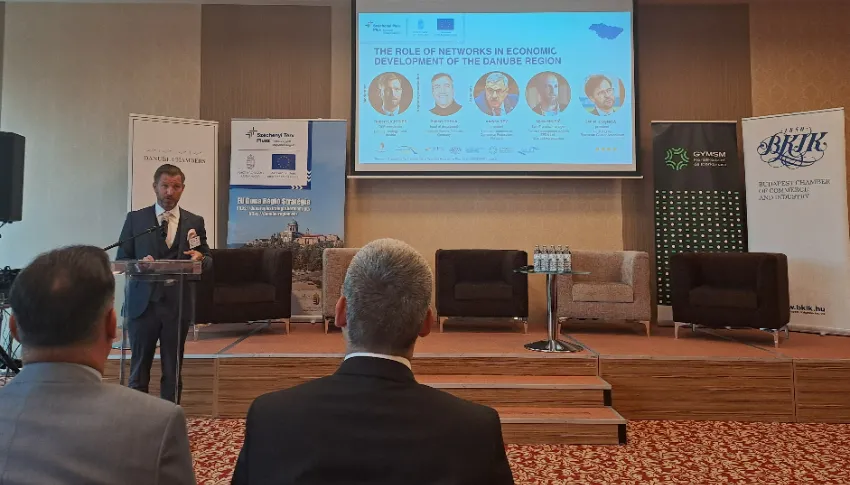
We asked the participants about their experiences at the event and the future of the cooperation that brings together several countries and regions.
Dr. Robert LICHTNER, Head of Danube Strategy Point:
How would you rate the Future of Businesses within the Danube Region international conference?
The conference was a great success. Bringing together experts, stakeholders, business representatives, academia, interest groups, as well as practitioners and project implementers from across the Danube Region was a key element that gave the event its true added value. Through the exchange of views, experiences, best practices, and knowledge sharing from various perspectives, the conference provided an excellent platform to explore how the Danube Region should define its future priorities, address existing bottlenecks, and promote cross-border cooperation. These discussions are crucial for advancing business development and enhancing the Region’s prosperity, living standards, and sustainable growth.
What do you think are the most important outcomes/results of the conference?
In light of current European and global challenges, and considering both EU and national thematic priorities aligned with the upcoming EUs Multiannual Financial Framework, the conference offered valuable insights into the added value of networks such as the EU Strategy for the Danube Region, particularly in fostering digital transition, and economic and social development. Experts emphasized the need for closer cooperation and a stronger focus on developing sustainable businesses across the region. Providing quality employment opportunities and ensuring access to excellent education were highlighted as key strategies to combat brain drain, thereby fostering long-term prosperity, cohesion, and resilience within Danube communities. The panel discussion also underscored the importance of encouraging innovative, forward-looking business models, reducing administrative burdens, and granting more operational freedom to enterprises. Additionally, the creation and effective functioning of regional clusters were highlighted as exemplary models of enhanced cooperation among Danube regions, building on shared competencies and complementarities.
What do you think is the most important organizational element of such a joint initiative connecting several countries and regions?
Without a doubt, the engagement of diverse stakeholders from different countries and regions is essential. This diversity of regional perspectives not only highlights the varying challenges faced by Danube countries but also offers valuable insights into concrete cooperation opportunities, where one region can benefit from the strengths of another, and vice versa. Ultimately, this dynamic fosters a network of trust and mutual understanding, which serves as a strong foundation for future collaborative projects.